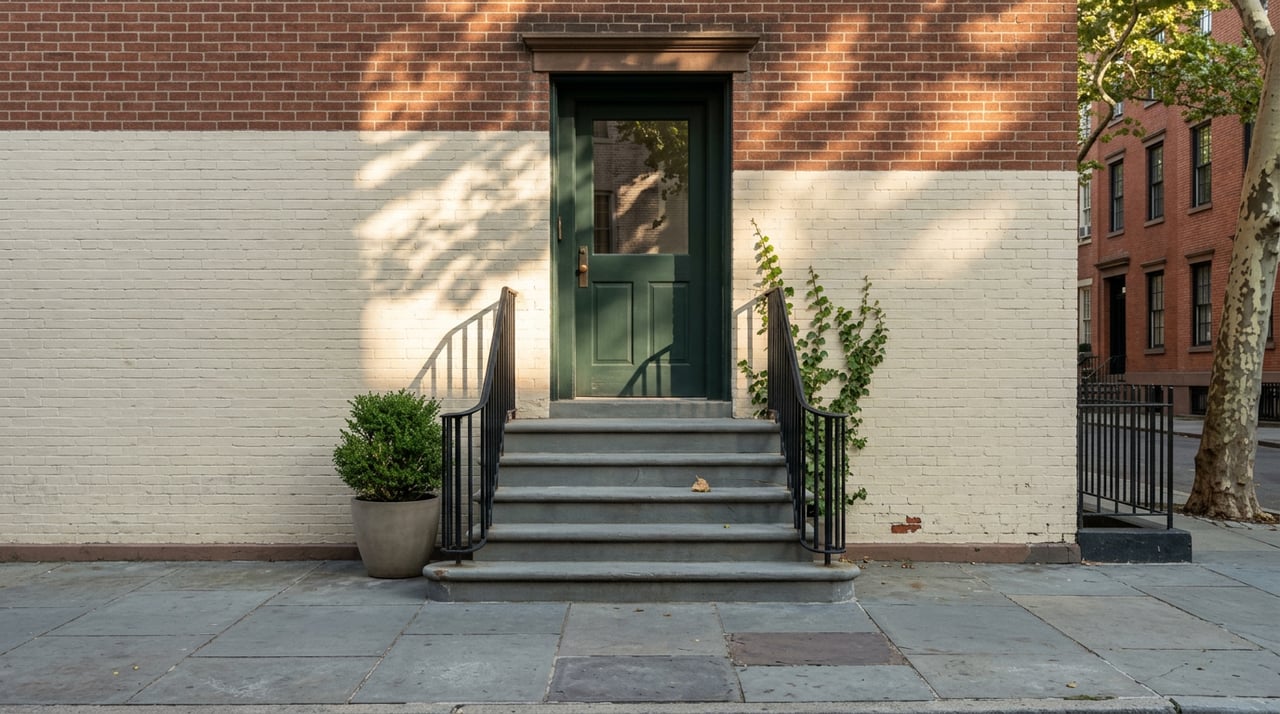
For most of the last decade, a new opening on Bleecker Street meant one of two things: a bigger brand testing a downtown flagship, or a tasting menu built for people who arrived by car. This summer looks different. Walk the block between Sixth Avenue and Seventh, then cut west to Hudson, and the ground-floor turnover reads like something the neighborhood used to have and briefly lost: small, chef-owned rooms sized for people who live upstairs.
The tell is not the number of openings. It is the shape of them. Two-level bars with wood-fired ovens, a seafood counter returning three blocks from its old address, a Bedford Street cafe operating as a sequel to the bistro next door. None of these rooms are trying to be destinations. They are trying to be someone's regular Tuesday.
The pattern under this summer's arrivals
Look at the operators, not the cuisines, and a thesis emerges. The teams opening in the West Village in 2026 are already based here. Zimmi's, a Southern French bistro that opened around a year ago on Bedford Street, is building a small cafe next door with pastries and a wine program, according to The Infatuation, which reports the team's next project on Bedford Street will be a little cafe with small plates, an extensive wine program, and sweet and savory pastries and desserts. The rotisserie chicken spot Cleo Downtown coming to the neighborhood is from the team behind Margot and Montague Diner, with fries, salads, cocktails, and natural wine to pair with the poultry. Keepers, the new '70s-inspired thin-crust room, is from the people behind Dandelion, Zero Bond, and White Horse Tavern, doing thin, bar-style pies with classic toppings and specialties like the Chicagoland with sausage and giardiniera.
The through-line is that operators with a working room in the neighborhood are choosing to open their second room in the neighborhood too. That is not the tasting-menu playbook. It is the corner-store playbook, adapted for hospitality.
What just opened on Bleecker
The most visible new arrival is Yesterday's, at 157 Bleecker. It opened April 10, 2026, and by summer it had settled into a full weekly rhythm. The room is 6,500 square feet on two levels, designed by New York-based Yakka Studio, with warm lighting, wood finishes, banquette seating, playful elements like disco balls, and an expansive bar anchoring the space. Hours run late by Village standards. Monday through Wednesday from 4 p.m. to midnight, Thursdays until 2 a.m., Fridays from noon to 4 a.m., Saturdays 10:30 a.m. to 4 a.m., and Sundays 10:30 a.m. to midnight. The kitchen is built around wood-fired pizzas available all day alongside elevated comfort dishes, and brunch service began on May 9, 2026.
A block east, Keepers pushes in the opposite direction on the same street. Where Yesterday's is a two-level room built for a crowd, Keepers is small and stool-heavy, with a menu that includes the Chicagoland, with sausage and giardiniera, and the Shore Thing, topped with crab. That the same ownership group also runs the White Horse Tavern on Hudson matters. It means Keepers is not a real-estate speculation on Bleecker. It is a second room by a team that already runs a first one four blocks away.
Between them sits the older infrastructure that quietly makes both of these rooms work. Blind Tiger at 281 Bleecker has been pouring craft beer since 1995, with 28 rotating taps running $6.50 to $11 and cask ale around $7, a list that changes faster than you can develop favorites. The Red Lion at 151 Bleecker keeps its double life going: a Bleecker Street football pub by day showing every match with the sound on, and one of the last nightly live-music rooms in the Village with no cover most sets by night. Neither is new. Both are the reason a new bar on the same block can open without needing to be a destination.
What came back to Hudson
The reopening story of the summer is Mary's Fish Camp. The room closed in 2024 and, according to The Infatuation, the West Village seafood restaurant is back in the neighborhood a few blocks away on Hudson Street. The distance matters. A closure that turned into a relocation three blocks away is a different signal than a closure that turned into a Brooklyn or Hell's Kitchen relocation, which is what several West Village names have done in the last five years. The customer base is close enough to walk over on foot, and the operator judged the block was still worth the rent.
Farther south on Hudson, White Horse Tavern remains what it has been for a very long time. The second-oldest bar in the city, at 567 Hudson Street, pouring since 1880, with sidewalk tables that have hosted seventy years of writers pretending to work. Its ownership team is the same one now opening Keepers on Bleecker, which is how you know a neighborhood is still functioning as a neighborhood: the operators of the 1880 bar are the ones expanding, not being displaced.
The Bedford Street sequel and the small stuff in between
Bedford Street is where the pattern is most visible at close range. Zimmi's, the Southern French bistro, is getting a sequel next door on Bedford Street from the same team, with small plates, an extensive wine program, and sweet and savory pastries and desserts. That is not a franchise. It is one team taking a second lease on the same block because the first one worked.
The category the neighborhood is filling out fastest is the small daytime room. Nepita is a West Village gelato shop drawing inspiration from Corsica and the wider Mediterranean, with an olive tree inside and past flavors from its pop-up era that include wild mint, acorn squash and brown butter, and clementine. Richaud Petite Bakery, owned by a baker who grew up in Paris, is aiming at the jambon beurre gap in the city. And in the frozen category, the West Village shop Birdie's is offering six flavors of frozen yogurt with toppings that range from olive oil to Cinnamon Toast Crunch, while the Madrid-born chain Myka opened West Village, Union Square, and Midtown locations all within two months, serving original tart yogurt with a rotating sorbet and toppings like baklava crumbles and kataifi.
Two frozen yogurt openings in the same neighborhood in the same season is not a coincidence. It is a rent signal. Two operators independently ran the numbers on a small West Village storefront and both decided the foot traffic supports the model. That is not what a declining retail block looks like.
Babbo's return is the outlier that proves the point
The one arrival that reads like an old-model destination reopening is Babbo. Per newyork-onmymind's July 2026 update, Babbo is the West Village's big reopening story of 2026, with the original having run for over two decades as one of New York's defining Italian restaurants before closing in 2022. Add Le Chêne, which the Urban List describes as one of the West Village's newest restaurants but already among the hardest bookings in town, Parisian through and through with a 44-page wine list, from chef Alexia Duchêne and her husband Ronan Duchêne Le May, and you have exactly the kind of high-visibility booking room the neighborhood used to be defined by.
Both matter. Neither dominates. Sitting inside a block that also holds Yesterday's, Keepers, Zimmi's second room, Mary's Fish Camp's return, Nepita, and Richaud Petite, the destination rooms read as part of a mix rather than the whole story. That mix is what a functioning residential neighborhood needs. The 8 p.m. reservation and the 10:30 a.m. bakery share the same block, and the block supports both.
A late-summer walk that reads the pattern
For a resident planning an August evening around the actual state of the neighborhood, one walkable sequence:
- Start at Richaud Petite for a mid-afternoon jambon beurre or a pastry.
- Cut down Bedford Street to see the Zimmi's second-storefront work in progress.
- Cross to Hudson for an early oyster at Mary's Fish Camp's new address.
- Walk south on Hudson to White Horse Tavern for one drink at the 1880 bar.
- End on Bleecker at Keepers for a bar pie, or at Yesterday's if the group is bigger than four.
The whole route walks in under half an hour. It also tells you, without needing a market report, which direction the ground floor is moving.
What this actually tells a West Village resident
The interesting number here is not a median price. It is the count of independent operators expanding within a fifteen-minute walk of their first room. That number is unusually high right now, and it is a lagging indicator of something real: operators who already know these blocks are willing to sign second leases on them. When a chef opens their sequel next door instead of in Williamsburg or the Lower East Side, they are telling you the rent, the staffing, and the foot traffic still pencil out for a small room.
For anyone who lives on these blocks, that is the whole story. The West Village that people move here for, the one with the small chef-owned room at the corner and the bakery two doors down, is being rebuilt by the operators who never left. That rebuild is happening on Bleecker, on Bedford, and on Hudson, in real time, this August.
If you want a closer read on how block-level shifts like these fit into the broader picture of West Village buying, selling, and long-term ownership, Rachel Realty NYC is here to talk it through in person. Schedule a Consultation when the walk gives you a question worth asking.